New York opens its first adult-use nursery licences on 5 November. Fifty applications, first come, first served. Clean starting material is about to become a licensed product.
Every facility should know where its genetics live, nursery licence or not. For most, that means a mother room. It is the riskiest place they could be.
The mother room is a single point of failure
Every cut carries whatever its mother carries. One infected mother seeds every clone you pull from her, then every run those clones go into.
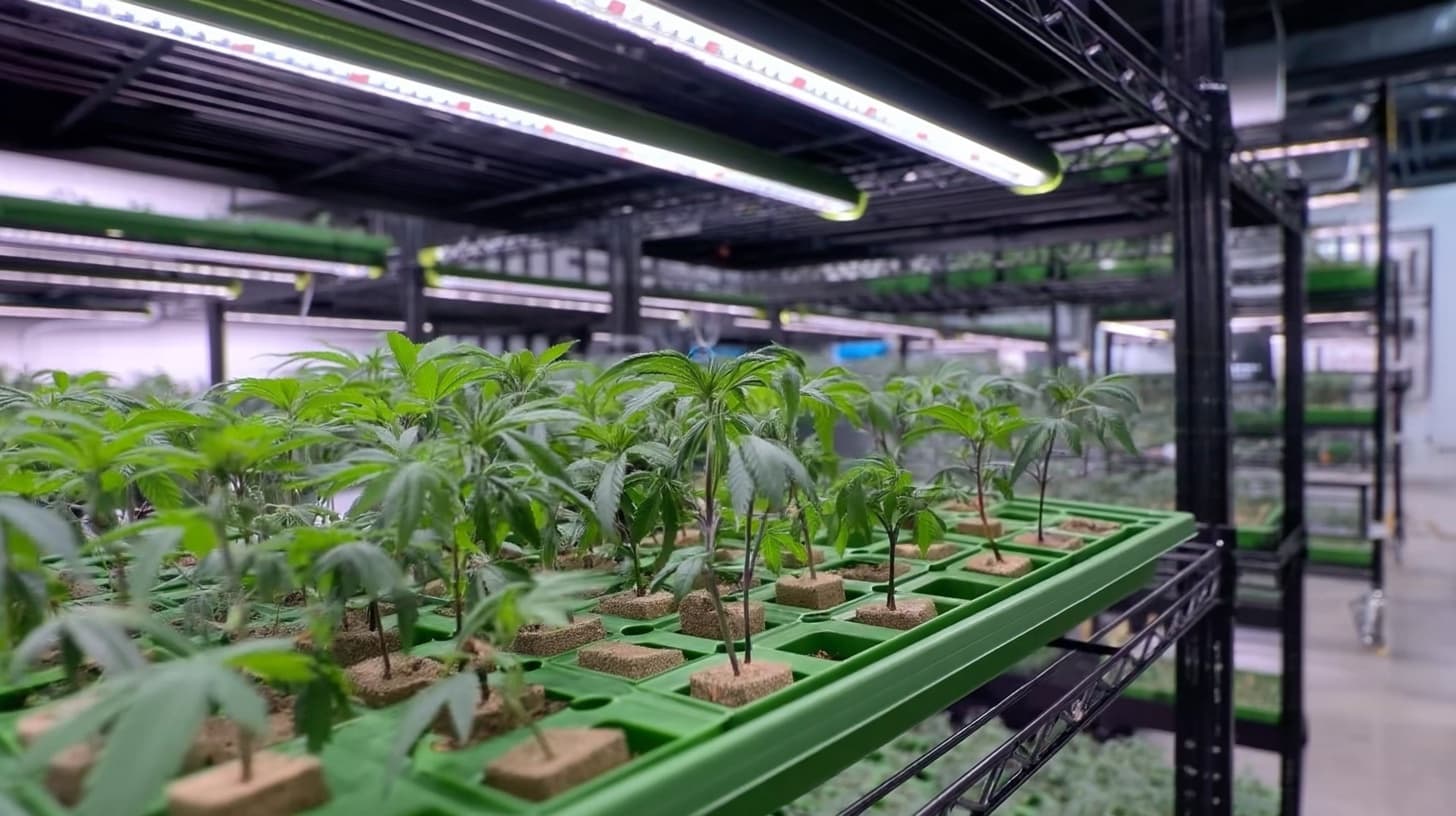
The pathogen behind most of the worry is hop latent viroid (HLVd): a small loop of RNA, with no protein coat, that infects cannabis and hops. Infected plants often look fine in veg. The bill arrives in flower.
As plants mature, Oregon State University's extension guide lists stunting, yellowing, brittle branches, misshapen leaves and small buds. In THC-type plants the viroid cuts flower mass and trichome numbers and lowers cannabinoid and terpene levels (Oregon State University, 2024). Growers call the result duds.
Zamir Punja's lab at Simon Fraser University has spent years on this viroid. In a 2025 paper, his team put the damage at "several billions of dollars in lost revenue to date in North America" (Punja et al., Plants, 2025).
A 2026 follow-up found infected plants more susceptible to Fusarium root and stem rot and to powdery mildew (Canadian Journal of Plant Pathology). If your rooms already fight powdery mildew, an infected mother makes that fight harder.
How common HLVd is
The most cited number comes from Dark Heart Nursery, a California clone supplier. After roughly 200,000 tissue tests, the nursery reported in 2021 that 90% of the California facilities in its research had HLVd (Ganjapreneur). That is one nursery's own testing, and the nursery sells clones.
The independent data is calmer, and still ugly. Of nearly 16,000 samples from Canadian facilities sent to a diagnostic lab in 2020 to 2022, 26% came back positive, Oregon State reports. Roughly one in four.
How HLVd moves
HLVd travels in sap: on blades, scissors and gloves, in cuttings from infected mothers, and in seed and pollen from infected plants. Leaves touching do not appear to pass the viroid on, and there is no evidence that sap-feeding insects do.
Cuttings are the fast lane. Punja's team found infection in cuttings from infected mothers at "rates of up to 100% within 4 weeks of vegetative propagation". The viroid also outlasts a quick clean. It survived 7 days in crushed leaf sap, and 4 weeks in dried leaves and roots, at room temperature.
Your cleaning may not touch the viroid. In the testing Oregon State reports, alcohol, hydrogen peroxide and Virkon did not inactivate HLVd; bleach and hypochlorous acid are the ones it lists as likely to work.
In Punja's tests, only a 20% bleach solution fully broke down the viroid in sap. That alcohol wipe between mothers is theatre.
What tissue culture fixes
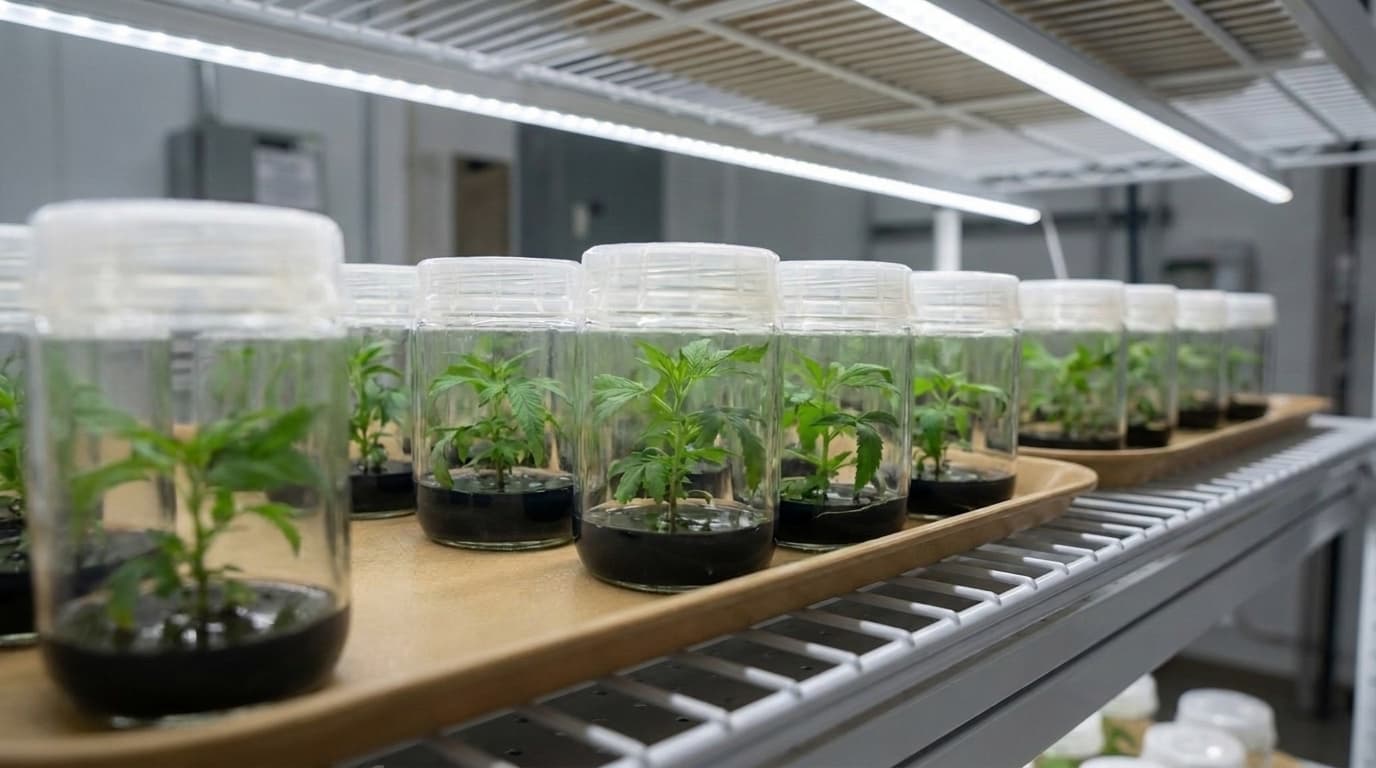
Tissue culture grows plants from a few cells in sterile jars of nutrient gel. To clean up a viroid, labs regrow plants from the meristem, the tip of a shoot where cells are still dividing, often after a spell of heat treatment (thermotherapy). Some of the regrown plants test free of the viroid, and those become the new clean stock.
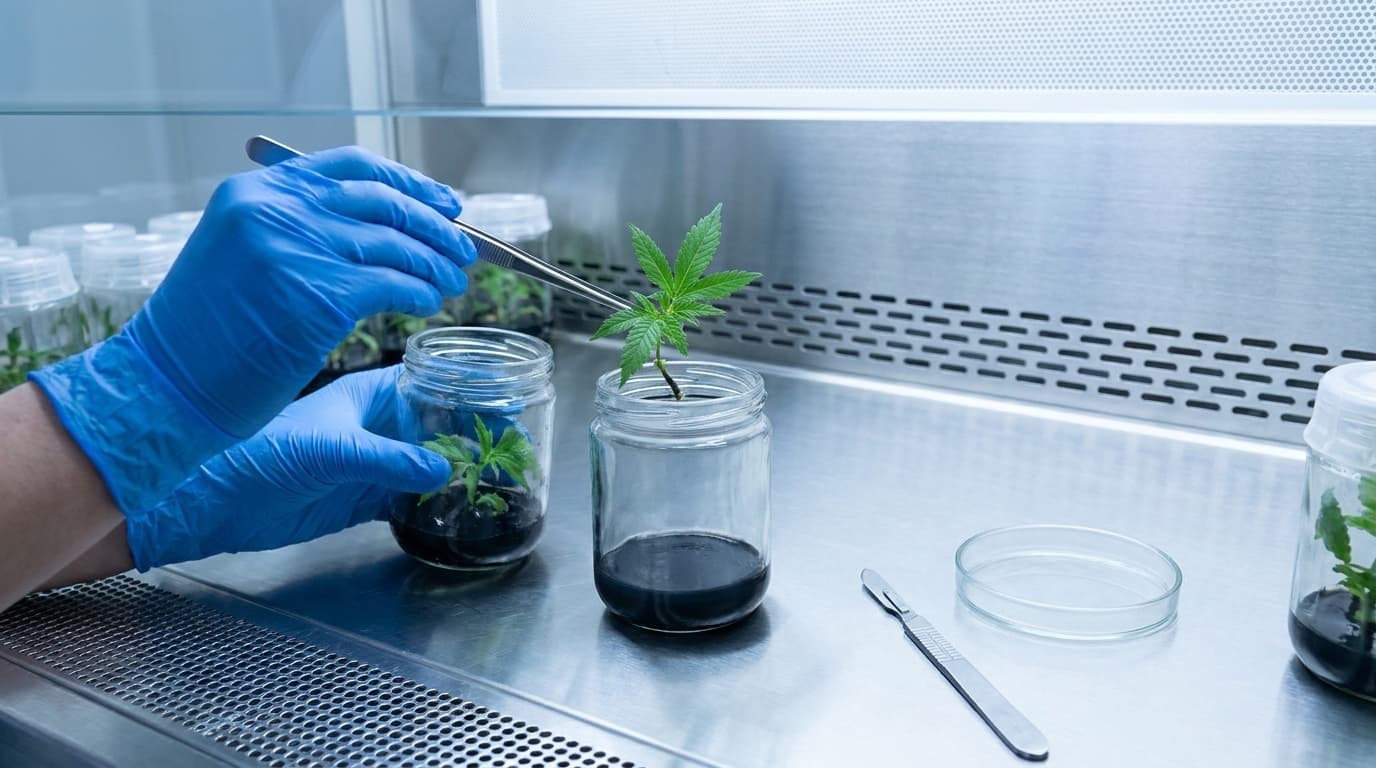
The second job is storage. A shelf of jars can hold a cultivar library that would otherwise fill a mother room, and plants regrown from it are clones of the source. For the long haul, a 2021 review names cryopreservation, storing tissue frozen, as the most effective way to keep a clonal line genetically true (Monthony et al., Plants).
What the lab can't fix
Tissue culture clears some cultivars and fails on others. In a 2025 study, Torres and colleagues combined meristem culture with heat treatment across 13 cultivars and cleared HLVd in five (Plant Cell, Tissue and Organ Culture). In Punja's trials, the share of clean plantlets "ranged from nil to 100%" depending on the cultivar.
Results depend on genetics. The 2021 review found responses vary by genotype at every stage of the process. Most drug-type protocols were optimised on a single cultivar, and most have never been repeated by another lab, so your best cut may be the one a lab struggles to grow.
Cultures can also fail in the jar. The same review reports culture decline across many studies: glassy, waterlogged shoots (hyperhydricity), callus instead of shoots, and cultures that die.
And you cannot breed your way out yet. Some cultivars seem to shrug off the symptoms, but "we have no data on what could make a cannabis strain more resistant," Punja told MJBizDaily in 2024.
Clean is a habit, not a purchase. A tested plantlet that goes back into a room with untested mothers and alcohol-wiped blades is one cut away from reinfection. Retest, quarantine and fix the sanitation, or the lab work is undone by the first dirty blade.
Build, buy or keep mothers
Facilities are taking one of three routes.
| Route | What it takes | Watch for |
|---|---|---|
| Build an in-house lab | A sterile room, a flow hood, a trained technician, months of setup | Cultivars the lab cannot grow, culture decline, one person holding the know-how |
| Buy from a nursery or lab | A supplier who tests and documents its starting material | What their test covers, how often they retest, what the licence lets you do with a cut |
| Restart mothers from clean stock | A tested source, a quarantine area, a retest schedule | Reinfection through tools and incoming cuts |
We have left costs out. Every published figure comes from a company selling labs or services, so get two quotes before you believe one.
Three questions decide the route: how many cultivars you keep, how often you bring in outside cuts, and whether starting material is something you plan to sell.
Genetics are becoming a product
New York's nursery licence covers seeds, clones and immature plants, sold to licensed cultivators, microbusinesses and other nurseries, never to consumers. Indoor nurseries are capped at 10,000 sq ft. The application fee is $1,000, and the first window closes at 50 applications (New York Office of Cannabis Management).
Canada has had a nursery licence since legalisation in 2018. Changes in March 2025 raised the area a nursery can flower from 50 m² to 200 m² (Health Canada).
When starting material is a product, ownership follows it. A cultivar can come with a patent, plant variety protection or a licence that limits what you do with a cut: clone it, cross it, save seed, sell the offspring (High Times). Ask before you buy, and know where you stand before you sell.
What to do this quarter
- Test every mother, roots as well as leaves. Oregon State notes that roots can test positive two weeks after a cutting is taken from an infected mother.
- Quarantine incoming cuts until they test clean, in a space with its own tools.
- Swap the alcohol wipe for a disinfectant that works on HLVd, and change blades between mothers.
- Record which mother every clone batch came from, so a positive test traces straight back to its source.
- Then choose your route. Build, buy, or restart mothers from clean stock.
The checklist below puts all five on one page. Print it, pin it up in the mother room, tick it off.