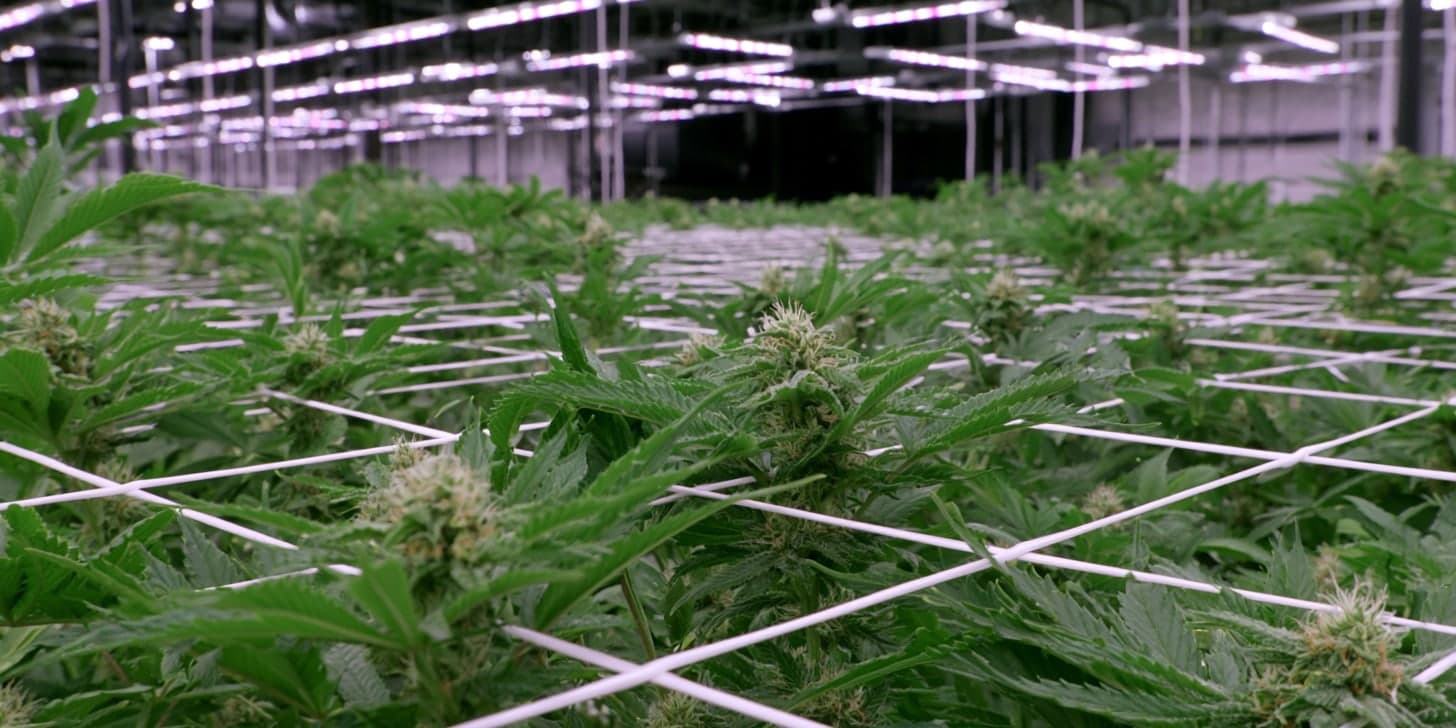
Yes, growing environment affects a cannabis plant's terpene profile, but in a 2026 study it mattered far less than the cultivar. Researchers in Argentina grew three cannabis cultivars three ways: indoors, in a greenhouse and outdoors. Then they worked out how much of the difference in the flower's terpenes, cannabinoids and other compounds came from the cultivar, and how much from the growing method. The cultivar explained 24% of the differences between samples. The growing method explained 4% (Caruso et al., Journal of Chromatography A, 2026).
So the cultivar mattered far more than whether it grew indoors or out. Even so, the two together explained only about 28% of the differences.
The study could not say what caused the other 72%. Harvest timing, drying and sampling are all possible causes, and a grower controls much of that.
What explained the chemistry of the flower
Share of the variation in 32 terpenes, 10 cannabinoids and other compounds. Three cultivars, each grown indoors, in a greenhouse and outdoors.
- Cultivar24.28%
- Growing method (indoor, greenhouse, outdoor)4.16%
- Neither factor: variation inside each group71.56%
Caruso et al., Journal of Chromatography A, 2026. "Neither factor" is 100% minus the other two, so it also holds the cultivar and method interaction, which the authors found was not significant.
The cultivar matters most
The team at the National University of La Plata measured 32 terpenes, 10 cannabinoids and a range of other compounds in each sample. They used a statistical method called ASCA to work out how much of the difference between samples came from the cultivar and how much from the growing method. Most of the paper is about that method.
Two findings matter for growers. First, the growing method shifted all three cultivars in the same direction.
Second, indoor flower had a larger share of monoterpenes, the lighter, more volatile family that includes myrcene and limonene. Outdoor and greenhouse flower had more sesquiterpenes, the heavier family that includes caryophyllene and humulene. Greenhouse flower was closer to outdoor than to indoor.
Don't compare the study's numbers with your certificate of analysis (COA). It used two-dimensional liquid chromatography, and most labs test terpenes by gas chromatography.
An earlier study found the same pattern. Chemists at Columbia University compared clones of two cultivars, one set grown indoors and one outdoors in California. The outdoor flower had more terpenes overall and a bigger share of sesquiterpenes, including β-caryophyllene and α-humulene (Zandkarimi et al., Molecules, 2023).
Read that one with care. There were three samples per group, and the indoor and outdoor flower came from different commercial growers, in different media. The authors flag "the limited information on the growing conditions of each cultivar in each environment" themselves.
Does growing environment affect cannabis terpene profile, and which part of it?
Indoor, greenhouse and outdoor growing differ in light, temperature swings, humidity, airflow and growing medium, all at the same time. A study that compares them can show that the growing method made a difference. It cannot say which of those settings caused it.
Trials that change one setting at a time can.
At the University of Guelph, Youbin Zheng's lab flowered cannabis under light levels at the canopy from 120 to 1,800 µmol/m²/s. Yield rose about 4.5 times. Total terpenes rose from 8.85 to 12.7 mg/g, and myrcene roughly doubled (Rodriguez-Morrison et al., Frontiers in Plant Science, 2021).
Cannabinoid potency did not change at any light level. The authors call the terpene effect minor, and 120 to 1,800 is a far wider range of light than you would find between two working flower rooms.
The result is still useful. Light changed the terpenes without changing potency, so two rooms can test the same for THC and still differ in terpenes.
What the study could not explain
Cultivar and growing method explained about 28% of the differences between samples. The other 72% was variation between samples of the same cultivar grown the same way, and the study was not designed to say what caused it. Likely causes include differences between plants, between buds on one plant, harvest timing, handling and sampling, and the lab itself.
Some of those are in your control. Harvest day is one.
In Quebec, Philip Wiredu Addo's team harvested the same outdoor field a week apart. The later harvest carried 26% more THCA and 60% more CBGA (Addo et al., Journal of Applied Research on Medicinal and Aromatic Plants, 2026). So harvest date alone can change what the lab reports.
Drying changes terpenes too
Terpenes keep changing after harvest.
At the Aristotle University of Thessaloniki, Efstratios Mallis and colleagues dried one cultivar three ways, each to 12% moisture. Freeze drying took about 11 hours and an oven at 40 °C took 35. VPD-controlled drying, which holds the vapour pressure deficit (how hard the air pulls water out of the flower), took six to seven days.
Freeze drying kept the sesquiterpenes and lost a large share of the monoterpenes. VPD drying kept the most essential oil and stayed closest to the fresh aroma profile, while cannabinoids barely shifted under any method. The authors' conclusion: "drying methodology exerts a much greater influence on terpene composition than on cannabinoid content" (Mallis et al., Journal of Cannabis Research, 2026).
That matters for the Argentine study. Its indoor flower had more monoterpenes and its outdoor flower more sesquiterpenes, and drying alone can cause a shift like that. The abstract does not say how each site dried its flower, and the full paper is paywalled, so we could not check.
The wider literature agrees. A 2026 review found that drying regimes and storage conditions, including temperature, light, oxygen and moisture, consistently shifted terpene and cannabinoid profiles (da Costa-Oliveira et al., Journal of Cannabis Research, 2026).
Engineers at Dalhousie University write that commercial drying and curing are "often based on empirical practices rather than quantitatively optimized engineering principles" (Robinson and Martynenko, Food and Bioproducts Processing, 2026). If your dry room is run by feel rather than set points, it can change your terpenes without anyone knowing. Here is how commercial growers dry and cure.
Our view: heat may explain some of the difference
We think heat can evaporate a lot of the terpenes, which may give the impression that the growing environment changes the terpenes produced.
The studies above are consistent with this. Monoterpenes such as myrcene and limonene evaporate most easily, and outdoor and greenhouse flower had a smaller share of them in the Argentine study. Greenhouses and outdoor fields often run hotter than an indoor room, and warm drying or storage can drive off more after harvest.
Heat will not be the whole answer. In the Guelph trial, more light meant more terpenes, so the environment changes how much the plant makes as well as how much it keeps. Still, temperature is the first setting we would check, from late flower through to the jar.
Before you blame the cut, check the records
Say the same cultivar comes out of Room 2 with a different terpene profile from Room 1. Was it the room, the drying, the sample or the lab?
Without records for each run, you can only guess, and it is easy to blame the genetics or the lab. Sometimes the cut really is the problem. Hop latent viroid lowers cannabinoid and terpene levels in infected plants (more on clean genetics), so test your mothers, then rule out everything else.
These records let you compare two certificates fairly:
| Record | Why it matters |
|---|---|
| Room conditions through flower: light level, temperature, humidity, VPD and CO₂ | Light alone moved terpene levels in the Guelph trial |
| Harvest day | One week moved THCA by 26% in Quebec |
| Which plants and which canopy positions went into the sample | Plant-to-plant and bud-to-bud differences are part of what the 2026 study could not assign |
| Dry and cure: method, temperature, humidity, days to target moisture or water activity | Drying moved terpenes far more than cannabinoids in Greece |
| Storage between cure and test | Temperature, light, oxygen and moisture shift profiles |
| Lab and test method | Two labs, or two methods, and you are comparing labs |
Water activity measures the free water in the flower. It governs both shelf stability and mould growth, which makes it the figure to log at the end of the cure (Robinson and Martynenko).
Grow Sensor covers the room conditions in that table. Grow Sensor PRO reads leaf temperature, VPD, CO₂, humidity and light at the canopy, and GrowOps keeps the full history across rooms and runs. The dry room and the lab need their own log.
Run the test on your own rooms
- Pick one cultivar you run in two rooms.
- Log the records above for its next harvest in both.
- Sample the same canopy positions in each room, and dry both batches the same way.
- Send both to one lab, on one method.
- If the profiles still differ, the room is the most likely cause.
When the same cut gives different certificates in two rooms, records are how you find out why.